 rganauta
Helpful microbes and biotechnology in 3D
Biotechnology uses living things, or parts of them, to make products or solve problems. Bacteria and fungi, like yeasts and molds, are among its oldest…
Explained for every age
For kids (7–11)
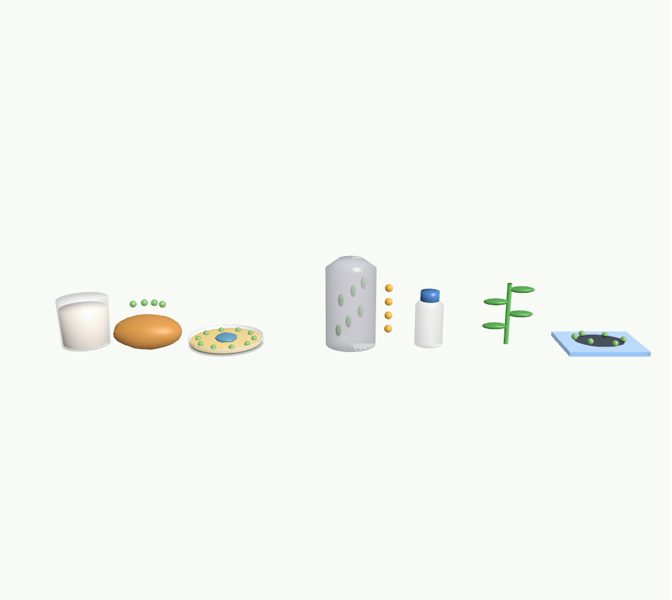
Not all microbes make you sick: many are great helpers. They make yogurt and bread, produce medicines like insulin, help prepare vaccines, clean up places dirtied with oil and even help get copper out of rocks. Using living things to create useful things is called biotechnology.
For teens (12–16)
Biotechnology uses living things, or parts of them, to make products or solve problems. Bacteria and fungi, like yeasts and molds, are among its oldest tools. They are used to make fermented foods, antibiotics, medicines like human insulin and vaccines; to clean up pollution (bioremediation); to obtain metals like copper (bioleaching, widely used in Chile); and to produce biogas, rich in methane, from food scraps, manure or wastewater. With genetic engineering, a microbe can also be given a new gene so it makes a useful protein. To learn what bacteria and viruses are like, visit the microbes zone.
Pre-Med (17+)
Microbial biotechnology covers traditional processes (fermentation) and modern ones based on recombinant DNA: inserting a gene into a vector (plasmid) and expressing it in a host such as Escherichia coli or Saccharomyces cerevisiae, grown in bioreactors. Examples: recombinant human insulin; recombinant chymosin for milk coagulation in cheesemaking (recognized as safe by the FDA in 1990; estimated to be used in about 60% of U.S. hard cheese); recombinant vaccine antigens; bioremediation of hydrocarbons and metals; copper biomining with acidophiles such as Acidithiobacillus ferrooxidans; and biogas from anaerobic digestion by methanogenic archaea, whose product is mainly methane and CO2.
What you can explore
Fermented foodsAntibiotics: discovery and resistanceRecombinant insulinGenetically modified cropsVaccine productionBioremediation and biomining
Missions
- Helper microbes Explorer
- Living factories Discoverer
- Recombinant DNA, resistance and biomining Pre-Med