 rganauta
Bone (histology) in 3D
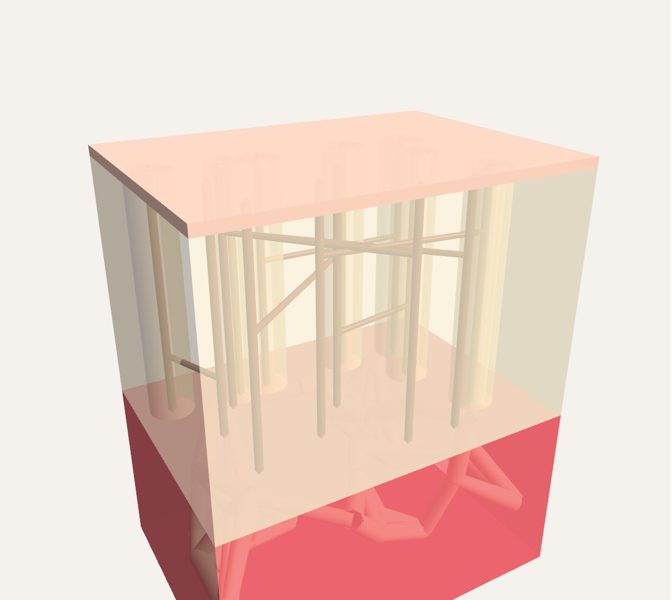
Connective tissue with a collagen matrix hardened with calcium salts. Compact bone is organized into osteons: cylinders of concentric layers around a…
Explained for every age
For kids (7–11)
Bone isn't a rock: it's alive. On the outside it is compact and super hard, made of tiny columns with a little blood tube in the center. On the inside it is spongy, like a honeycomb, and blood is made in the spaces.
For teens (12–16)
Connective tissue with a collagen matrix hardened with calcium salts. Compact bone is organized into osteons: cylinders of concentric layers around a canal with vessels. Spongy bone has trabeculae with marrow between them. Cells: osteoblasts (build), osteocytes (maintain) and osteoclasts (break down); in adults about 10% of the skeleton is renewed each year.
Pre-Med (17+)
Matrix: ~30% organic (type I collagen, osteocalcin) and ~70% mineral (hydroxyapatite). Compact bone: osteons with a Haversian canal, concentric lamellae, osteocytes in lacunae with canaliculi, Volkmann canals, interstitial and circumferential lamellae. Spongy bone: trabeculae oriented along lines of stress (Wolff's law), hematopoietic red marrow. Remodeling by osteoblast–osteoclast units (RANKL/OPG); PTH, calcitonin, vitamin D, estrogens.
What you can explore
Bone growthPeriosteumCompact boneOsteonBone blood vesselsSpongy (trabecular) boneBone marrowCollagen
Missions
- Bone is alive Explorer
- Inside the osteon Discoverer
- Remodeling and bone pathology Pre-Med