 rganauta
CPR: hands that save lives in 3D
Cardiac arrest happens when the heart suddenly stops beating or beats in a way that does not move blood. Without blood, the brain runs out of oxygen, the…
Explained for every age
For kids (7–11)
Sometimes a person's heart suddenly stops and no longer sends blood to the body. This is called cardiac arrest. The good news is that people nearby can help a lot, and fast! Your job is very important: make sure the place is safe, shout to call an adult and call emergency services. Here you will also learn the rhythm used to help the heart.
For teens (12–16)
Cardiac arrest happens when the heart suddenly stops beating or beats in a way that does not move blood. Without blood, the brain runs out of oxygen, the person collapses and, within a few minutes, can suffer serious damage. That is why every minute counts: calling emergency services, doing CPR (cardiopulmonary resuscitation) and using a defibrillator as soon as possible greatly increase the chance of survival. It is not the same as a heart attack, in which an artery gets blocked and the heart usually keeps beating.
Pre-Med (17+)
Sudden cardiac arrest is the abrupt cessation of effective mechanical activity of the heart, with no central pulse and absent or abnormal breathing. It is usually caused by arrhythmias, especially ventricular fibrillation and pulseless ventricular tachycardia, often on top of structural heart disease such as coronary artery disease. Without cerebral blood flow, consciousness is lost quickly and neurons begin to die within a few minutes, so survival depends on how fast CPR and defibrillation are delivered. It is distinct from acute myocardial infarction (coronary occlusion), although the latter can trigger it. This scene covers basic life support for lay bystanders; it is educational material and does not replace an accredited CPR course.
What you can explore
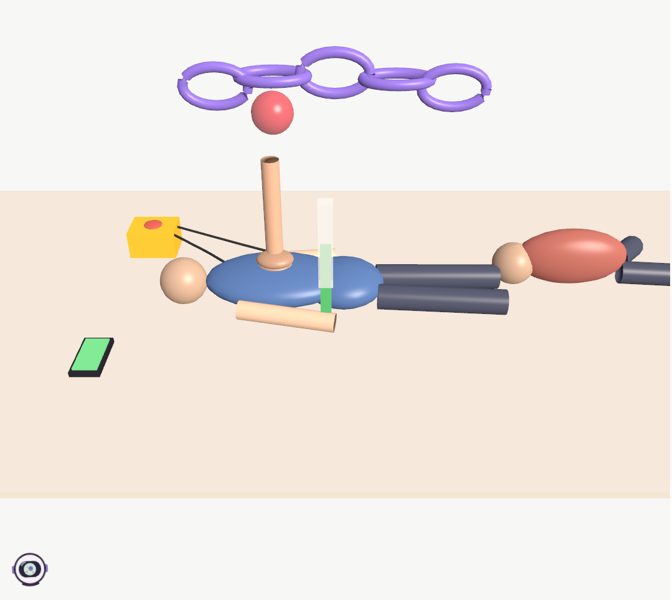
Chain of survivalCheck safety and responseCall emergency servicesChest compressionsAutomated external defibrillator (AED)Recovery position
Missions
- Little big helper Explorer
- The chain that saves lives Discoverer
- High-quality CPR Pre-Med