 rganauta
A medicine's journey in 3D
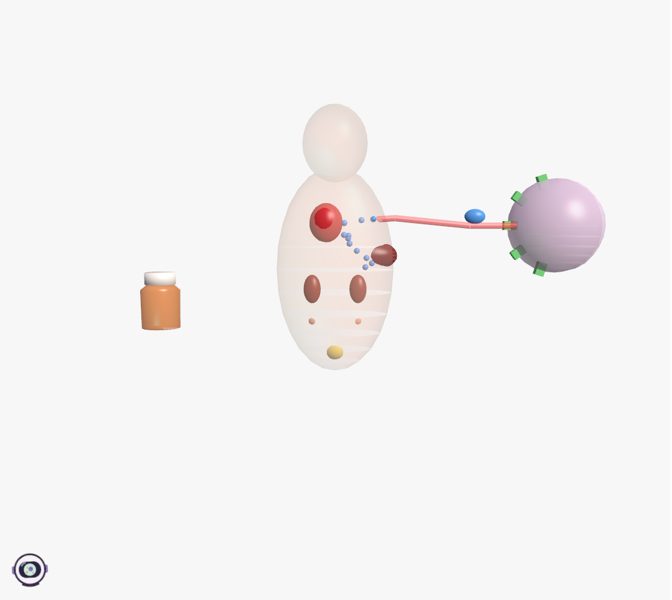
Scientists sum up a medicine's journey with the acronym ADME: absorption (it gets into the blood), distribution (the blood carries it around the body),…
Explained for every age
For kids (7–11)
When an adult gives you a pill, it starts a journey through your body. It breaks apart in the stomach, passes into the blood from the intestine, visits the liver, travels all around the body until it finds the place where it needs to help and, at the end, leaves in your urine. Medicines help when an adult who takes care of you gives them to you: they are not candy.
For teens (12–16)
Scientists sum up a medicine's journey with the acronym ADME: absorption (it gets into the blood), distribution (the blood carries it around the body), metabolism (the body changes it, mostly in the liver) and excretion (it leaves the body, mostly through the kidneys in urine). If it is taken by mouth, it first has to be released: the pill breaks apart and lets go of its active ingredient. Each stage affects how much medicine reaches the place where it acts and for how long.
Pre-Med (17+)
Pharmacokinetics studies what the body does to a drug and is summed up as ADME (or LADME when liberation is listed separately): liberation of the active ingredient from its dosage form, absorption into the systemic circulation, reversible distribution between compartments, metabolism or biotransformation into metabolites (mainly by hepatic cytochrome P450 enzymes) and excretion, mostly renal. Metabolism and excretion are grouped together as elimination. Together with pharmacodynamics (what the drug does to the body), these processes determine tissue exposure to the drug, its effect and its adverse effects. The route of administration shapes the whole journey.
What you can explore
Drug absorptionFirst-pass metabolismDrug distributionDrug and receptorDrug eliminationMedicine safety
Missions
- The pill's journey Explorer
- Crack the ADME code Discoverer
- Pharmacokinetics in six stops Pre-Med