 rganauta
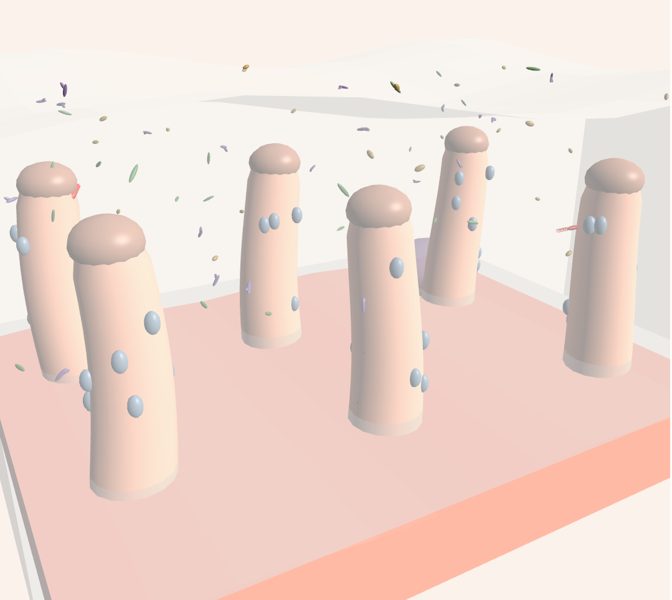
Intestine and microbiota in 3D
The villi multiply the absorptive surface (about 30 m² in the small intestine). Enterocytes absorb nutrients into the capillaries and fats into the…
Explained for every age
For kids (7–11)
Inside, the intestine is full of little fingers that absorb food, covered with a protective slime where trillions of good bacteria live. They finish digesting what you can't, make vitamins and leave no room for the bad ones.
For teens (12–16)
The villi multiply the absorptive surface (about 30 m² in the small intestine). Enterocytes absorb nutrients into the capillaries and fats into the lacteal; goblet cells make the mucus. In the mucus and the lumen live tens of trillions of bacteria of hundreds of species (bacteroides, firmicutes such as lactobacilli, bifidobacteria): they ferment fiber, producing fatty acids that feed the intestine itself, synthesize vitamin K and some B vitamins, and train the immune system. Underneath, Peyer's patches keep watch with lymphocytes.
Pre-Med (17+)
Intestinal mucosa: villi with enterocytes (brush border, disaccharidases), goblet cells (MUC2), Paneth cells in crypts (defensins), enteroendocrine cells; lamina propria with fenestrated capillaries and central lacteal; GALT with Peyer's patches and M cells. Microbiota: ~10¹³ bacteria, dominated by Bacteroidetes and Firmicutes; short-chain fatty acids (butyrate, acetate, propionate), bile acid metabolism, vitamin synthesis, colonization resistance, immune maturation (Treg, secretory IgA). Dysbiosis with antibiotics, Clostridioides difficile, IBD, obesity; fecal microbiota transplantation.
What you can explore
Intestinal villusGoblet cellsMucus layerCommensal gut bacteriaEnteric pathogenPeyer's patchVillus capillaries and lacteal
Missions
- The friendly bacteria Explorer
- An ecosystem inside you Discoverer
- Microbiota and digestive clinical practice Pre-Med