 rganauta
Microbes: bacteria and viruses in 3D
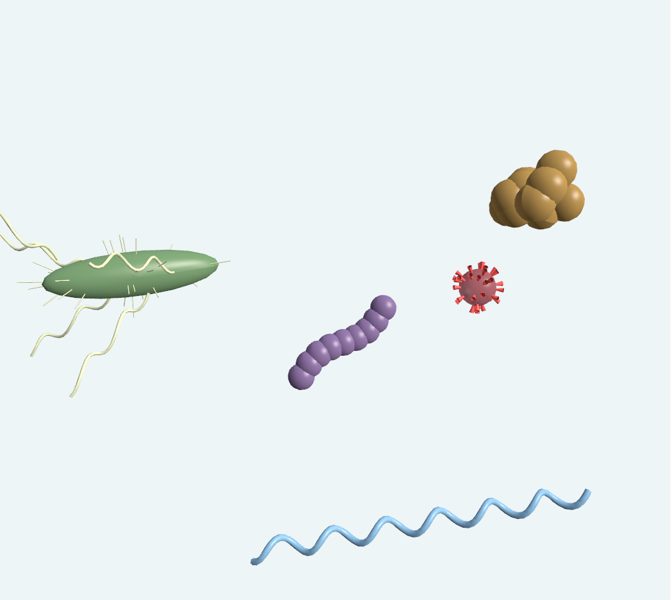
Bacteria: cells without a nucleus, 0.5 to 5 µm, with a cell wall, sometimes flagella for swimming and pili for gripping. Shapes: bacilli, cocci (in…
Explained for every age
For kids (7–11)
Microbes are living things so small you can't see them. Bacteria are complete cells that swim and multiply; viruses are much smaller and aren't fully alive: they need to get inside a cell to copy themselves. Most microbes don't cause harm, and many help us.
For teens (12–16)
Bacteria: cells without a nucleus, 0.5 to 5 µm, with a cell wall, sometimes flagella for swimming and pili for gripping. Shapes: bacilli, cocci (in clusters or chains) and spirochetes. Viruses: mostly 20 to 300 nm, just genetic material inside a protein capsid, sometimes with a membrane envelope with spikes; they don't feed or grow, they replicate inside cells. Bacteriophages are viruses that attack bacteria. In the scene everything is at true scale relative to everything else, except the virus, enlarged three times so you can see it.
Pre-Med (17+)
Prokaryotes: no nucleus or membrane-bound organelles, usually circular chromosome, 70S ribosomes, peptidoglycan wall (thick in Gram-positive; thin in Gram-negative, with outer membrane and LPS), capsule, flagella, pili (adhesion, conjugation), spores. Viruses: DNA or RNA genome, icosahedral or helical capsid, envelope with receptor-binding glycoproteins; cycle of attachment, penetration, synthesis, assembly and release. Lytic and lysogenic phages. Antibiotic targets (cell wall, 70S ribosome, gyrase) that do not affect viruses.
What you can explore
Bacillus (E. coli-like)CocciSpirocheteEnveloped virusBacteriophageNeutrophil phagocytosisBacteria and antibioticsUseful microbes and biotechnology
Missions
- Small but mighty Explorer
- Bacteria versus viruses Discoverer
- Clinical microbiology Pre-Med