 rganauta
Plant cell and photosynthesis in 3D
Photosynthesis is the process by which plants, algae and some bacteria (cyanobacteria) use the energy of light to turn carbon dioxide and water into…
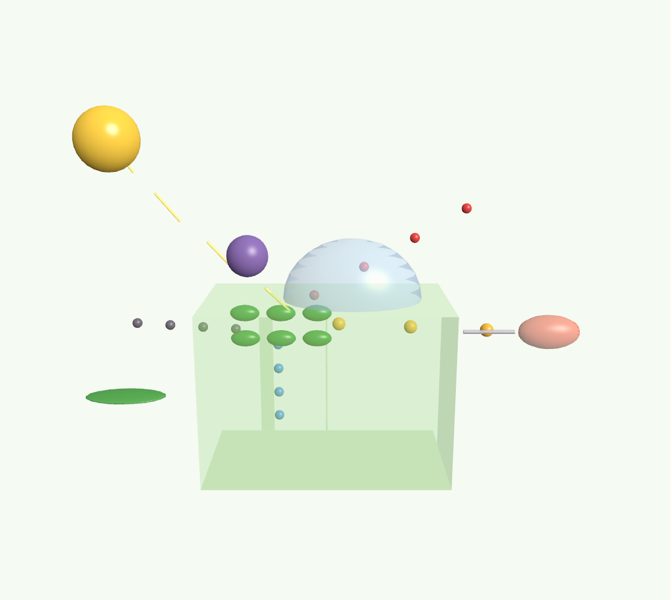
Explained for every age
For kids (7–11)
Plants are amazing cooks: with sunlight, water and air they make their own food and, along the way, they release the oxygen we breathe. Almost all the food we eat comes, directly or indirectly, from plants.
For teens (12–16)
Photosynthesis is the process by which plants, algae and some bacteria (cyanobacteria) use the energy of light to turn carbon dioxide and water into sugars, releasing oxygen. It happens mainly in the leaves, inside the chloroplasts of plant cells. That is why they are called autotrophs: they feed themselves. Animals, including us, are heterotrophs: we depend on the sugars made by photosynthetic organisms.
Pre-Med (17+)
Oxygenic photosynthesis converts light energy into chemical energy stored in the covalent bonds of carbohydrates. It consists of two coupled stages: the light-dependent reactions, in the thylakoid membranes, which produce ATP and NADPH and release O2 from the oxidation of water; and the Calvin cycle, in the stroma, which fixes CO2 and produces glyceraldehyde-3-phosphate (G3P), a precursor of glucose, sucrose and starch. Photoautotrophs are the base of almost all food chains, and the energy in fossil fuels comes from ancient photosynthesis. Cellular respiration in animals and plants follows the reverse path overall.
What you can explore
Plant cellChloroplastPhotosynthesis equationLight-dependent reactionsCalvin cyclePhotosynthesis and respiration link
Missions
- The green kitchen Explorer
- The recipe for photosynthesis Discoverer
- Chloroplast bioenergetics Pre-Med