 rganauta
From DNA to protein in 3D
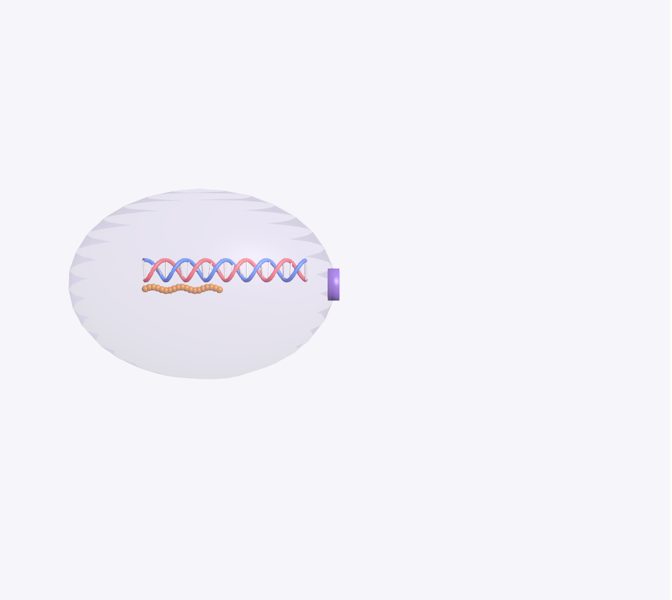
Protein synthesis has two steps. In transcription, inside the nucleus, RNA polymerase copies a gene from the DNA into a molecule of messenger RNA. In…
Explained for every age
For kids (7–11)
Your cells make proteins by following a recipe stored in DNA. First they copy the recipe into a message, which leaves the nucleus, and then a little machine called a ribosome reads the message and joins pieces, the amino acids, like beads on a necklace.
For teens (12–16)
Protein synthesis has two steps. In transcription, inside the nucleus, RNA polymerase copies a gene from the DNA into a molecule of messenger RNA. In translation, in the cytoplasm, the ribosome reads the messenger RNA three letters at a time, and transfer RNAs bring it the amino acids, which are joined into a chain. Finally the chain folds and becomes a working protein.
Pre-Med (17+)
Transcription: RNA polymerase locally unwinds the double helix and synthesizes RNA in the 5'→3' direction, reading the template strand from 3' to 5'. In eukaryotes the pre-mRNA is processed in the nucleus (5' cap, poly(A) tail of about 100 to 250 adenines, and splicing of introns by the spliceosome), and the mature mRNA exits through the nuclear pores. Translation: the ribosome binds the AUG start codon (methionine) and reads the mRNA in codons; each tRNA with the complementary anticodon contributes its amino acid, and peptidyl transferase forms the peptide bond, until a stop codon (UAA, UAG, or UGA), where a release factor frees the polypeptide. The chain then folds into secondary (alpha helix, beta sheet) and tertiary structures and may undergo post-translational modifications. The 30 s scene omits pre-mRNA processing and is not to scale.
What you can explore
DNA template strandRNA polymeraseMessenger RNA (mRNA)Nuclear poreTransfer RNA (tRNA)Amino acid chain (polypeptide)
Missions
- A protein's recipe Explorer
- Transcription and translation Discoverer
- From gene to polypeptide Pre-Med