 rganauta
Digestive in 3D
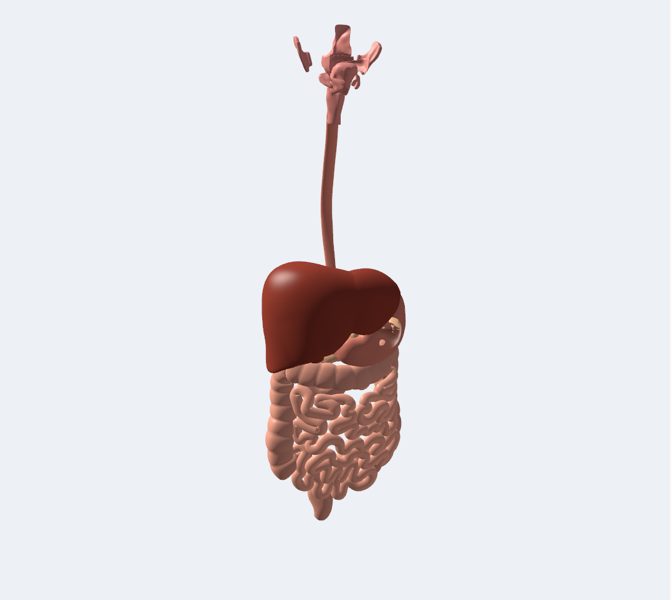
Mouth, esophagus, stomach, small intestine and large intestine, plus the liver, gallbladder and pancreas, which pour in their juices. It digests food,…
Explained for every age
For kids (7–11)
A super long tube that goes from your mouth to the very end: stretched out completely it would measure about 9 meters, although inside a living body it is shorter because its muscles keep it gathered up. Along the way it turns food into fuel and gets rid of what it can't use.
For teens (12–16)
Mouth, esophagus, stomach, small intestine and large intestine, plus the liver, gallbladder and pancreas, which pour in their juices. It digests food, absorbs nutrients in the small intestine and eliminates waste.
Pre-Med (17+)
Alimentary canal of ≈ 9 m measured at autopsy (shorter in life because of muscle tone), with four layers (mucosa, submucosa, muscularis, serosa) and accessory glands: salivary glands, liver (bile, metabolism), pancreas (enzymes and bicarbonate). Mechanical and chemical digestion, absorption in jejunal and ileal villi, motility driven by the enteric nervous system.
What you can explore
TongueMajor salivary glandsSoft palatePharynxEpiglottisEsophagusStomachDuodenumJejunumVermiform appendixColonLiverGallbladderCommon bile ductPancreasPancreatic duct
Missions
- The journey of food Explorer
- Juices and enzymes Discoverer
- Clinical case: abdominal pain Pre-Med
- The first bite Explorer
- The great crossroads Discoverer
- Clinical case: painless jaundice Pre-Med
- Put the food's journey in order Explorer